
Sex Offender Checks in Napa County
The official public source for a Napa County sex offender check is the California Megan's Law Website. The California Department of Justice manages this registry under Penal Code section 290.46. It offers a statewide view rather than a separate county list, so a reader can search Napa County while still using one authoritative California system. The site is free and is distinct from court dockets, jail booking reports, and a person's full state criminal-history record.
Begin with the question the registry can answer. A name search can help locate a known registrant. An address, city, ZIP, county, or map search can show public entries tied to an area. Results depend on the disclosure category set by law. A missing full street address does not, by itself, mean that an entry is incomplete or that the person failed to register. Some profiles are displayed at a broader community level.
Napa County Megan's Law Registry
The California DOJ Sex Offender Registry program maintains registration information received from law enforcement. Its public Megan's Law layer presents the details that state law permits the public to see. Napa County does not operate a replacement public registry. This division matters because the local agency accepts and updates registration information, while DOJ controls the public-facing statewide search.
Penal Code section 290 requires a registrant to report to the police chief in a city of residence or to the sheriff in an unincorporated area or a city without its own police department. Napa Sheriff Records also processes sex and arson registrants in unincorporated areas and contract cities. American Canyon receives police services through the Sheriff. St. Helena has its own police department, so city residents generally register there under the same state rule.
The California DOJ's official Megan's Law explanation shows how the public registry fits within the state program.
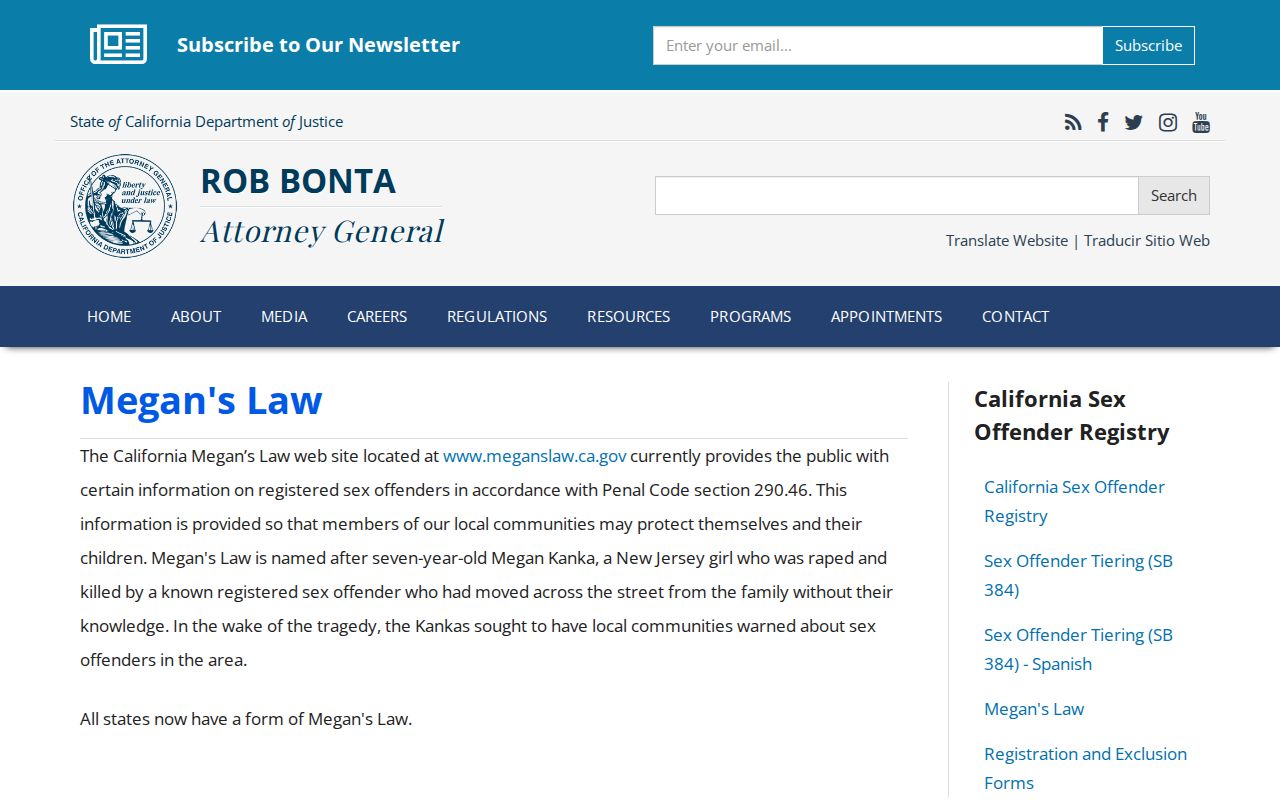
The state explanation reinforces why Napa County registration offices supply data while DOJ determines what the public website displays.
Note: The public website and the local registration counter serve different roles, even though updates from local agencies support the statewide record.
How to Search California Megan's Law
Use the official portal with a clear place or identity in mind. Broad queries can return people with similar names, while map results may reflect different levels of address disclosure. The search should be used to learn what the registry actually publishes, not to infer facts that do not appear in the profile.
- Open the California Megan's Law Website and read the conditions governing access and use.
- Choose a name search or a place-based search by address, city, ZIP, or Napa County.
- Review the list or map and compare the available photograph, physical description, aliases, and location details before identifying a profile.
- Open the profile, read its registerable-offense and disclosure information, and use an official law enforcement contact for a genuine compliance concern.
| Field Label | Type | Required | Notes |
|---|---|---|---|
| Name search | Text | Optional by mode | Searches by a registrant's name. |
| Address and radius | Address and map | Optional by mode | Supports a local community search; available radius choices may change. |
| City | Text or selection | Optional | Napa, American Canyon, St. Helena, Calistoga, and Yountville are local place terms. |
| ZIP | Text | Optional | Useful Napa County examples include 94558, 94559, 94503, and 94574. |
| County | Selection | Optional | Select Napa County for a countywide view. |
| Map or list view | Toggle | Optional | Changes how public results are displayed. |
The California Megan's Law search portal provides the name, place, map, and list tools described above.
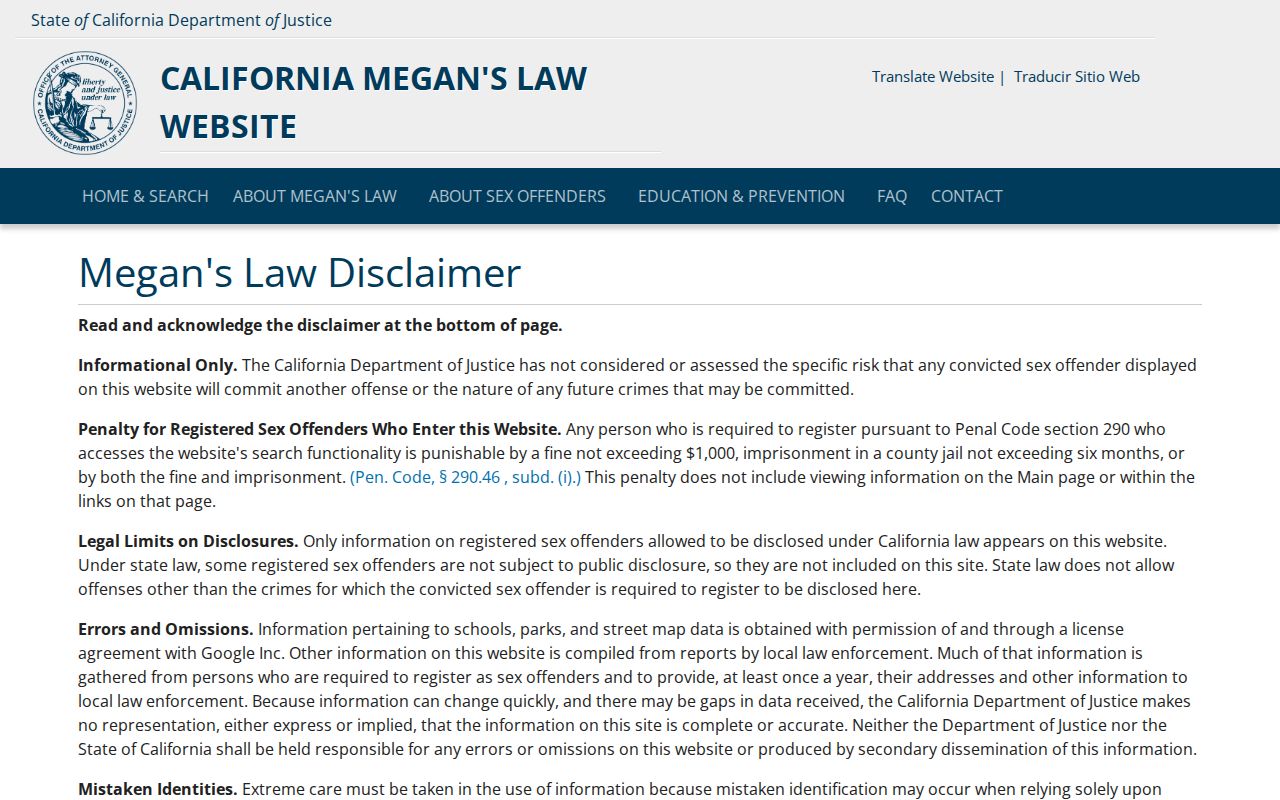
The portal view helps a reader select an appropriate Napa County search mode without centering the search on a private individual.
Napa County Registry Address Disclosure
A registry location is not shown at the same level for every person. Penal Code section 290.46 allows an address for specified higher-disclosure categories. Some tier-two and other categories may instead appear by community, ZIP code, and county. The distinction comes from California's public-disclosure rules, not from a Napa County search setting. Readers should preserve that distinction when interpreting a map pin or list result.
The profile also omits information by design. Victim names, birth dates, addresses, and the victim's relationship to a registrant are excluded. Employer names and addresses do not belong in the public profile, nor does unrelated criminal history. Juvenile ward adjudication information governed by Penal Code section 290.008 is not made public through the website. These limits protect people who are not the subject of the public registry and keep the record tied to its statutory purpose.
Inside a Registry Profile
A California Megan's Law profile combines identity details, a limited registerable-offense history, and the location information authorized for that disclosure class. It is not a full rap sheet. Matching several fields is essential because names alone can overlap and known aliases may broaden a result.
| Name and aliases | The published name and known alternate names used to help distinguish the person. |
|---|---|
| Photograph and description | A photograph plus public physical details such as date of birth, gender, race, and other descriptors. |
| Location | A street address for specified categories, or community, ZIP, and county information where full address disclosure does not apply. |
| Registerable history | Registerable crimes, with the year of conviction and most recent release year when available. |
| Risk information | A static SARATSO risk level or elevated violence-risk information when available, plus prior sexually violent predator adjudication where applicable. |
| Excluded information | No victim details, employer name or address, unrelated criminal history, or public juvenile ward adjudication data. |
SARATSO refers to California's State-Authorized Risk Assessment Tools for Sex Offenders. A displayed risk reference is one profile element, not a prediction of a specific act. Read it with the offense and location disclosures that DOJ provides.
The text of Penal Code section 290.46 defines both the public profile fields and the information excluded from disclosure.
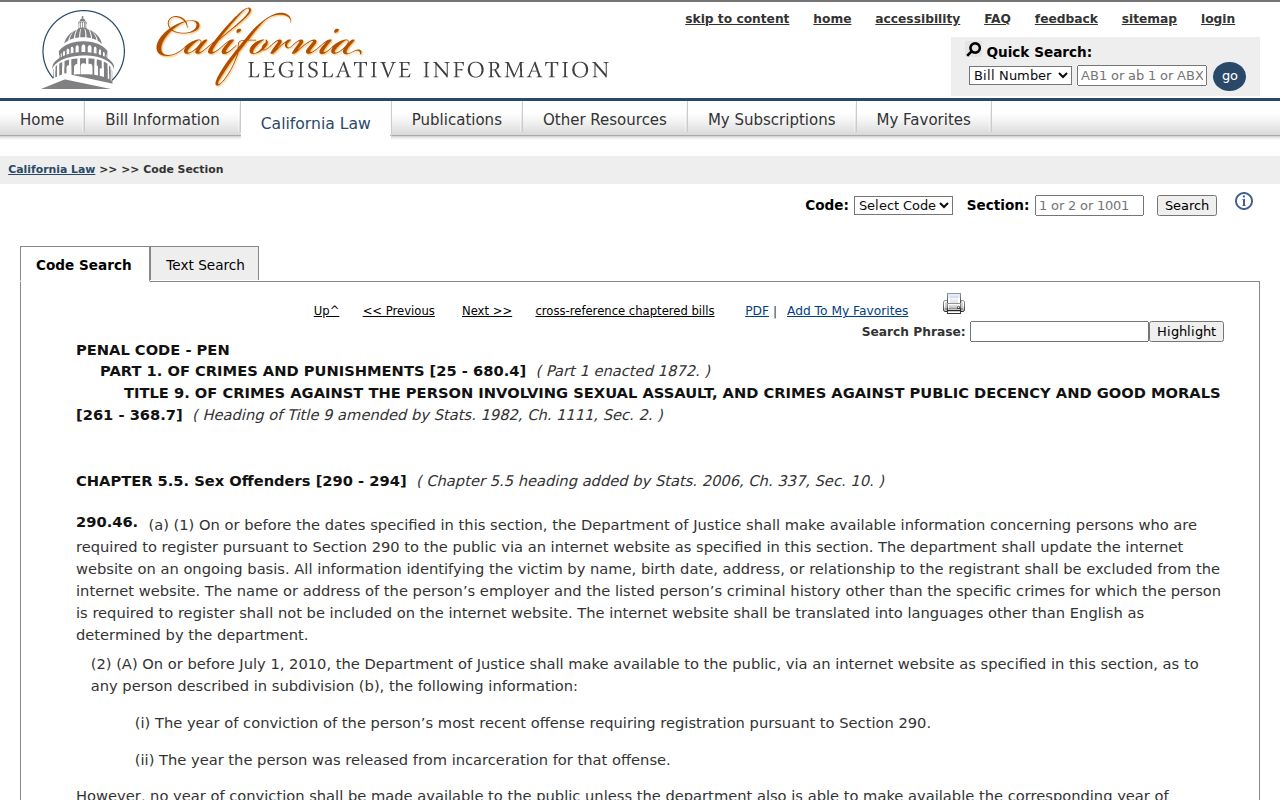
The statutory page supports a field-by-field reading of the profile instead of treating the registry entry as a full criminal record.
Napa County Offender Registration Offices
The Napa County Sheriff's Records Bureau handles registrants who live in unincorporated Napa County and contract cities. The public counter is at 1535 Airport Boulevard, second floor, Napa, and the Records Bureau phone number is 707-253-4440. The public-facing section is open Monday through Friday from 8 a.m. to 5 p.m., although the bureau itself is staffed around the clock for its broader records duties.
Napa County Sheriff Records Bureau
1535 Airport Boulevard, second floor
Napa, CA 94559
707-253-4440
Public counter: Monday-Friday, 8 a.m.-5 p.m.
Registration is an official law enforcement process, not a public request for another person's paperwork. A member of the public should use the Megan's Law website for disclosed registry data. A person with credible information about noncompliance should contact the agency responsible for the area instead of confronting the person or publishing private claims.
California Registration Levels and Requirements
Penal Code section 290 establishes California's three registration tiers. The duration is a statutory minimum, and the offense or other qualifying criteria determine placement. The public display of a profile is a related but distinct issue governed by the Megan's Law disclosure law.
The Legislature's Penal Code section 290 page is the primary source for tier duration and registration duties.
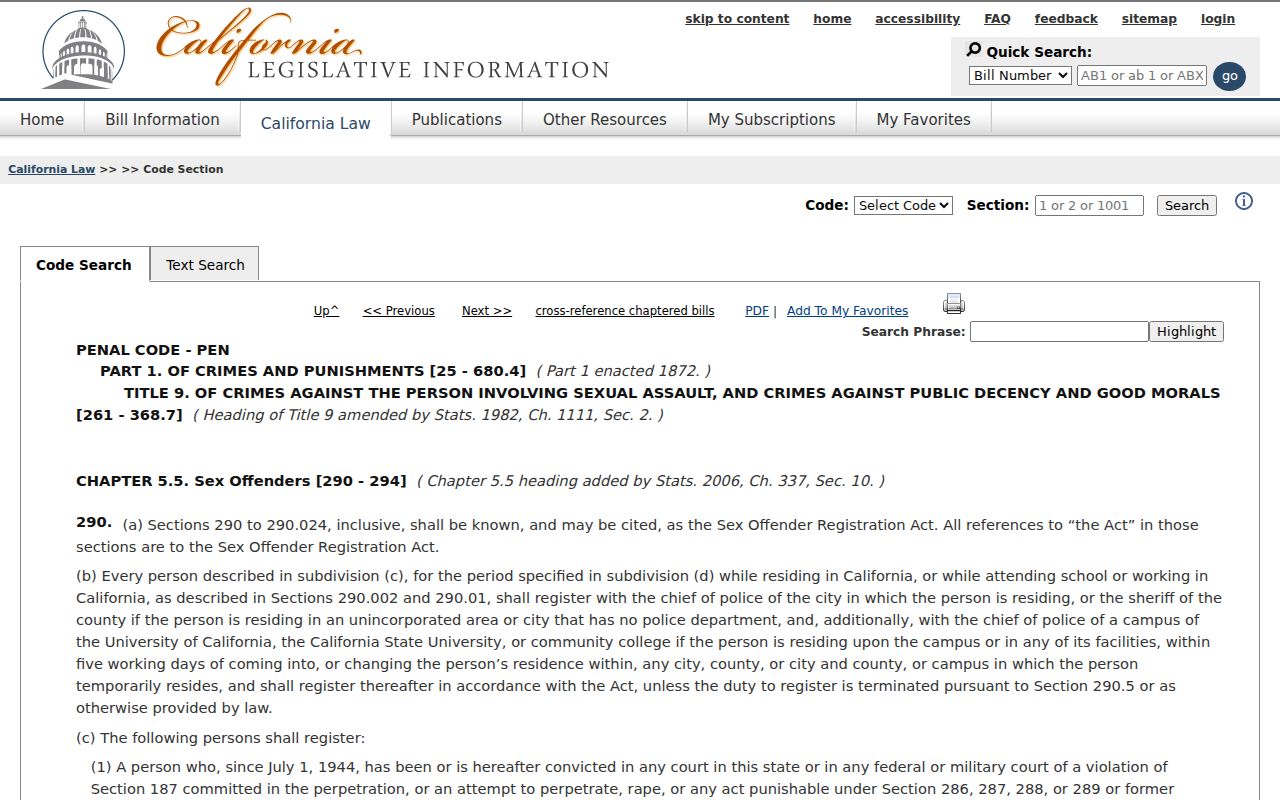
The statute provides the source framework behind the ten-year, twenty-year, and lifetime periods summarized in the table.
| Tier | Minimum Duration | General Statutory Description | Public Visibility |
|---|---|---|---|
| Tier one | 10 years | Generally registerable misdemeanors and some felonies not assigned to tier two or three. | Display follows Penal Code 290.46 and may not include a full address. |
| Tier two | 20 years | Certain serious, violent, or repeated offenses. | Some entries may use community, ZIP, and county disclosure rather than a street address. |
| Tier three | Life | Specified serious offenses, sexually violent predator commitment, and other listed categories. | Public details follow the higher-disclosure rules that apply to the profile. |
A tier duration does not reveal every duty, reporting event, or eligibility question tied to one person's status. Those questions belong with the registering agency or qualified legal counsel. The registry profile should be read only for the public facts it supplies.
California's separate Penal Code section 1170 sentencing law illustrates why a criminal sentence and a registry tier must not be treated as the same record field.
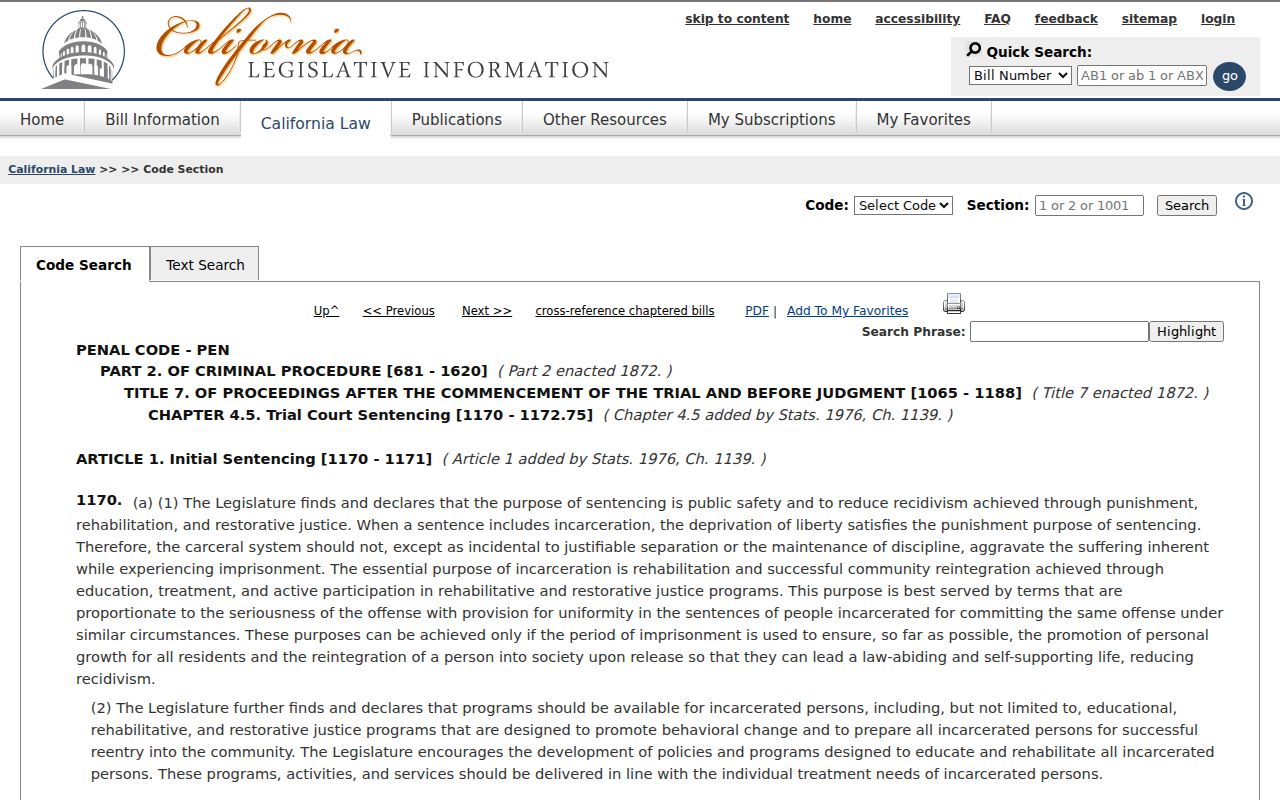
A court sentence can help explain the underlying case, but the registration duration still comes from section 290 and the applicable tier criteria.
Napa County Registry Searches Beyond
A Napa County-only filter cannot answer whether a person has a public registration in another state. The Dru Sjodin National Sex Offender Public Website, commonly called NSOPW, provides the official cross-state layer. It directs searches across participating public registries while each jurisdiction remains responsible for its source data and disclosure rules.
Use NSOPW when a name or location question crosses California's border or when prior residence may matter. Return to the source jurisdiction's official profile for detail. Different states publish different fields, and the absence of a field in one system cannot be filled by assumption. For a Napa County location question, California Megan's Law remains the controlling public registry.
Note: A national search broadens geographic coverage, but it does not turn separate state registry entries into a complete criminal-history report.
Napa County Registry Noncompliance Reports
Possible noncompliance should be passed to law enforcement. Preserve the public profile link, note the specific fact that caused concern, and contact the police department for a city address or Napa Sheriff for an unincorporated or contract-city address. Do not attempt an in-person verification. The public cannot determine compliance merely from an address display because California law intentionally uses different location levels.
The DOJ Megan's Law explanation describes the public system and its safety purpose. Local officers, not private users, can compare a report with protected registration data. This route supports community safety while reducing the risk of misidentification, harassment, or the disclosure of facts that the public site intentionally withholds.
Community Notification and Lawful Use
Penal Code section 290.46 authorizes disclosed information only to protect a person at risk. The law restricts use for insurance, loans, credit, employment, education awards, housing, and business benefits or services unless another law authorizes the use. Public access does not create permission to threaten, shame, discriminate against, or organize action against a person or household.
Misuse is unlawful: Using registry information to commit a crime can trigger civil liability and added criminal penalties under Penal Code section 290.46. The official Megan's Law misuse notice explains the consequences.
California law provides an added fine of $10,000 to $50,000 when registry information is used to commit a misdemeanor and an added consecutive five-year prison term when it is used to commit a felony. Other misuse can result in civil damages, attorney's fees, exemplary damages, or a civil penalty. A registered sex offender who accesses protected website functionality can also face a fine, county jail, or both. The sound practice is simple: use accurate public information for safety planning, report a real compliance concern through law enforcement, and never take private enforcement action.