
Napa County Criminal Court Cases
The Superior Court of California, County of Napa Criminal Division keeps felony, misdemeanor, minor-offense, and traffic files at 1111 Third Street. The first-floor counter opens Monday through Friday, 8 a.m. to 4 p.m.; drop boxes remain available until 5 p.m.
A Napa court file begins after a prosecutor files charges. It differs from a police report or CJNet booking. The clerk's record establishes filed counts, hearings, rulings, outcome, and sentence. Adult criminal prosecutions from Napa, American Canyon, St. Helena, and unincorporated communities all reach the county Superior Court when charges are filed, even though different police agencies may have made the arrest.
The arresting agency retains its incident narrative, the jail retains booking and custody data, and the District Attorney reviews reports before filing. The court then becomes custodian of the judicial record. That split explains why one official source may show an arrest while another has no case yet, or why a court outcome does not appear in a past-week booking report. A complete review follows the identifiers from agency record to court number without treating the products as interchangeable.
Napa Smart Search Fields
The Tyler Smart Search supplies public index and register information. Search by record number or party name in Last, First Middle Suffix order. Advanced filters include case type, status, filing dates, judicial officer, booking number, SO number, and FBI number.
A case-number wildcard needs four characters. A person wildcard needs three last-name characters plus an asterisk and one first-name character plus an asterisk. Registration is unavailable, and JavaScript and cookies are required. Business names with commas need Advanced Filtering or an asterisk in place of the comma. Those rules help prevent a false empty result.
The official Napa Smart Search interface displays the county search controls.
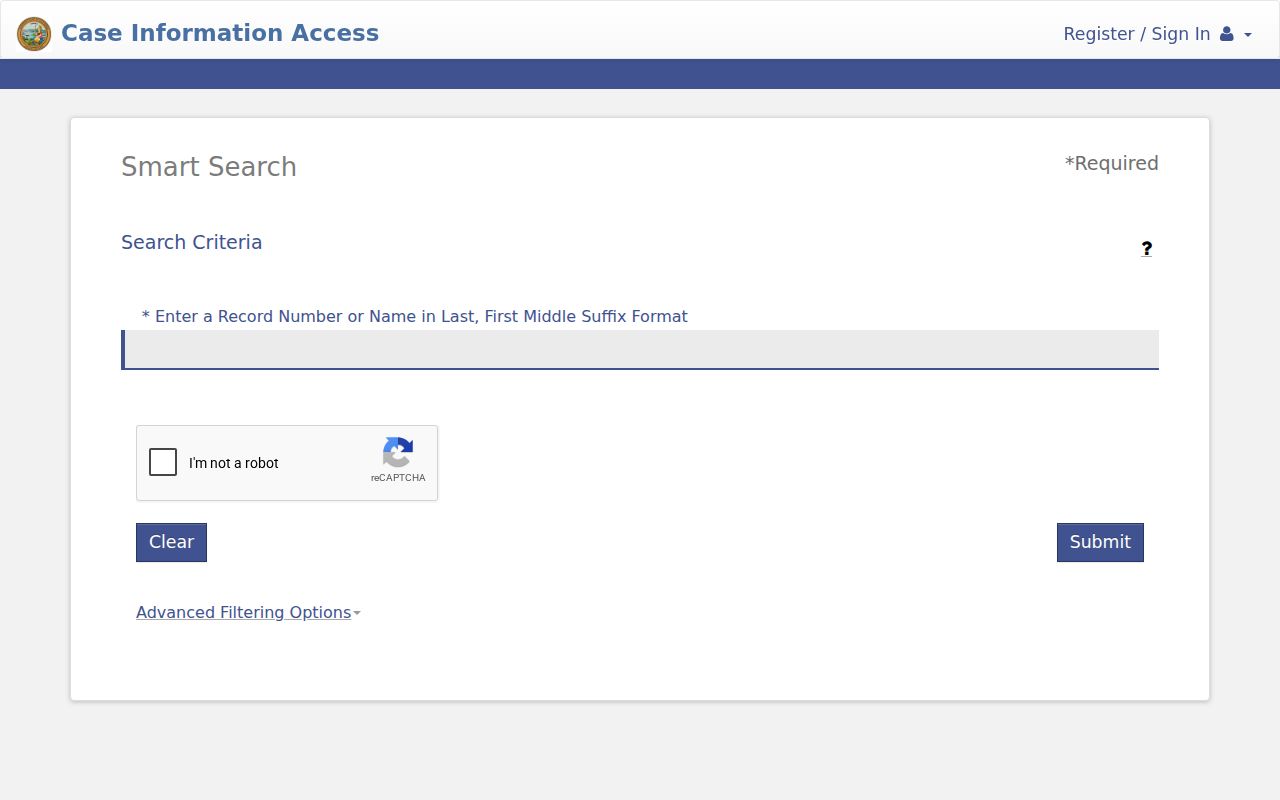
The screen shows why a known record number is the cleanest route and why advanced criteria help distinguish similar names.
| Field | Use | Format |
|---|---|---|
| Record number | Known case | Four characters before wildcard |
| Party name | Person search | Last, First Middle Suffix |
| Case criteria | Narrow results | Type, status, dates, judge |
| Identifiers | Advanced match | Booking, SO, or FBI number |
Searching Napa County Case Records
Start with the official portal, then use the clerk when the online view is incomplete. The case lookup page connects case access, payments, and calendars. Treat a result as an index rather than every paper in the file. Compare event dates and count numbers before ordering the charging document, minutes, judgment, or sentencing record.
Napa also offers a separate payment-search interface for eligible criminal and traffic matters.
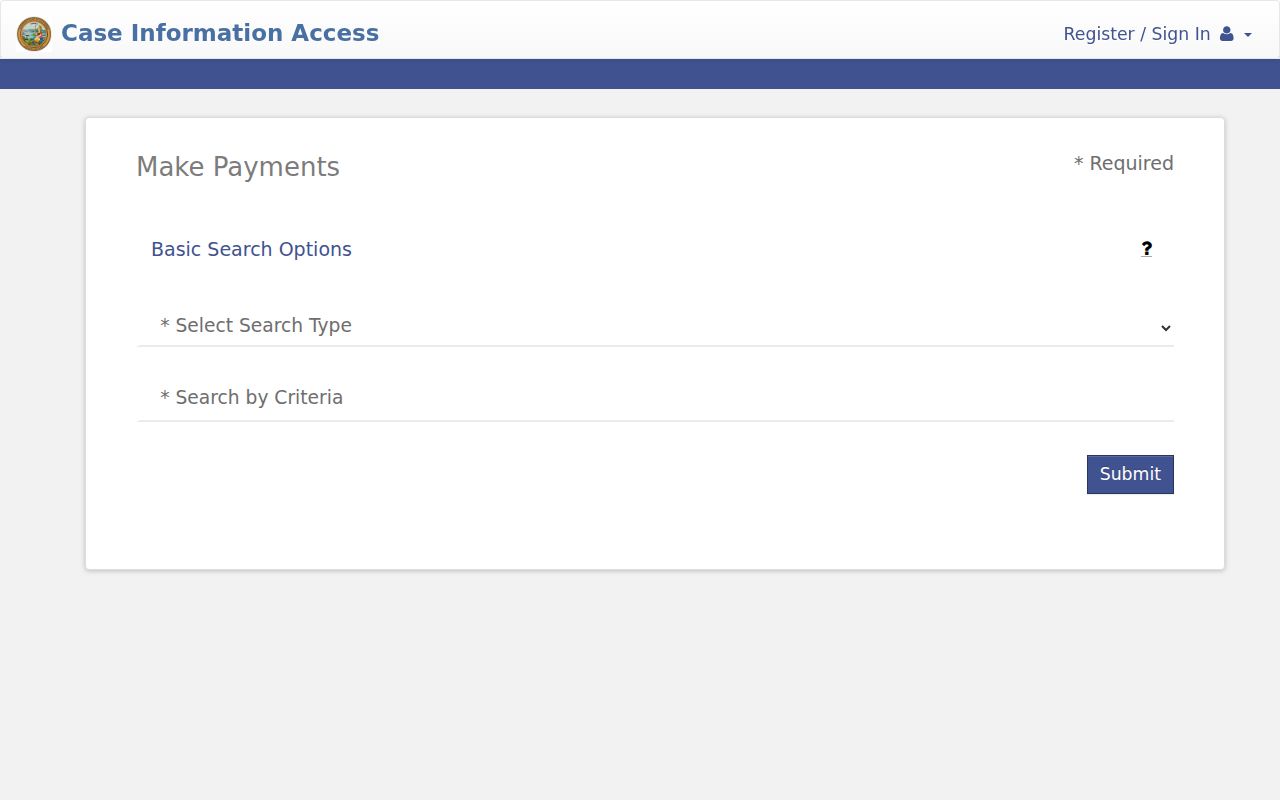
The payment screen accepts summons number, case number, party name, business name, or driver's license, but it does not replace a case-file search.
No single Napa search supplies every document. Name searches can return similar parties, while case numbers identify one file. Filing dates, case type, status, and judicial officer help narrow results. Once the correct register is open, note the case number and exact title of any paper needed before contacting the clerk. That preparation helps avoid paying for a broad name search when the desired file is already identifiable.
- Open Napa Superior Court Case Information Access.
- Search with a case number or party name.
- Apply type, status, filing-date, or judge filters.
- Read register entries and compare hearings with the calendar.
- Request the actual document or certified copy from the Criminal Division.
| Field Label | Type | Required | Notes |
|---|---|---|---|
| Party name | Text | No | Nickname and sounds-like options |
| Record number | Text | No | Best for known case |
| Case type/status | Filter | No | Advanced criteria |
| File dates | Date range | No | Start and end dates |
| Judicial officer | Filter | No | Narrows assigned matters |
Napa Calendar Versus Case Access
The Daily Court Calendar covers hearings set today through the next 14 business days. It answers when and where a matter is scheduled. Smart Search is stronger for the index and event history. Neither view necessarily supplies the motion, minute order, judgment, or charging paper behind an entry.
A citation or filing may take up to three weeks to appear. An empty result can reflect timing, spelling, confidentiality, or a poor identifier rather than prove that no Napa County case exists. Recheck the name format, then contact the Criminal Division when a public matter should appear.
The court's daily calendar page shows its limited scheduling window.
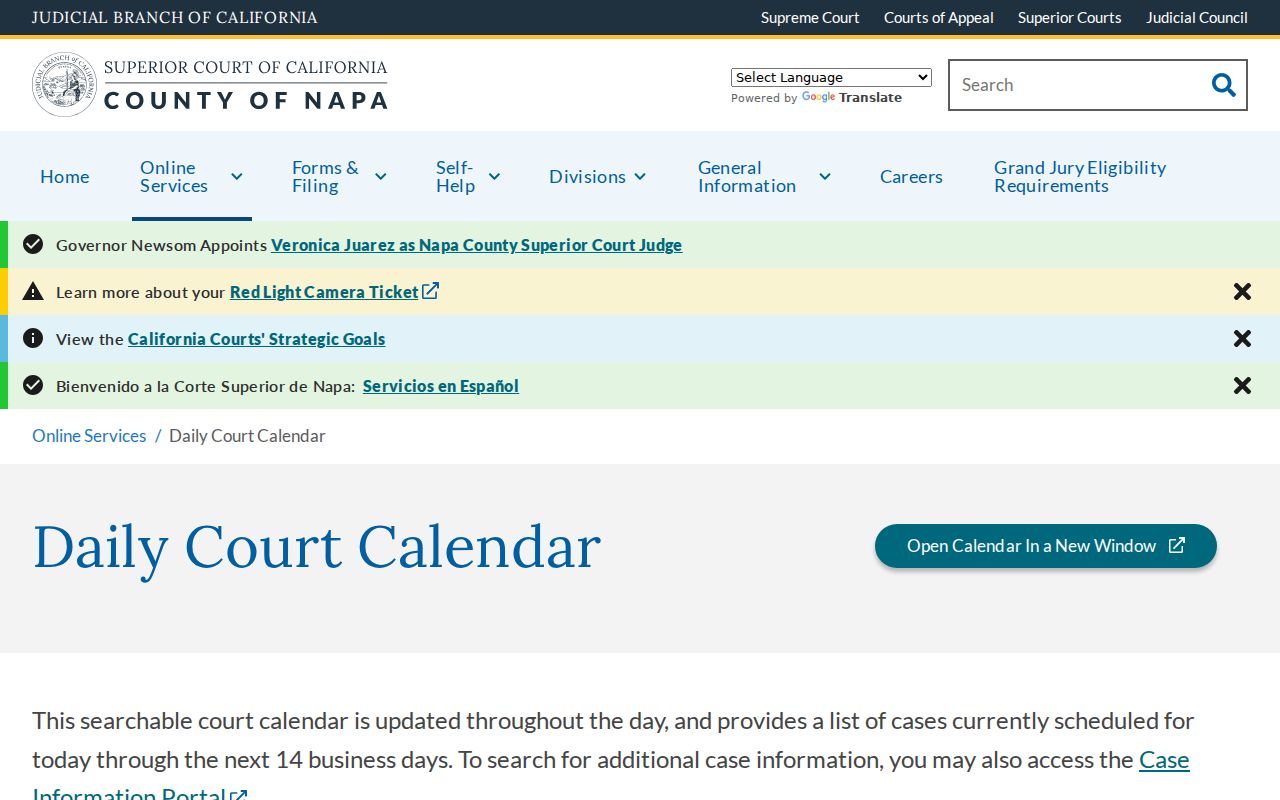
The calendar works best to confirm a near-term appearance after the correct case has been identified.
Inside a Napa County Case File
The register of actions is a timeline, while filed documents explain what occurred. Match the case number across the charging paper, minutes, rulings, and judgment before treating one entry as final. A complaint lists allegations, not proven facts. Minute orders record what happened at hearings. A disposition must be read by count because one allegation may be dismissed while another results in a plea or verdict.
Sentence records can list custody, probation, restitution, fines, and court conditions. A certified copy carries the clerk's official certification and costs more than an ordinary page copy. The California DOJ summary history is a separate compiled product, so a reader seeking exact Napa court language should use the originating file.
| Case number and court | Unique file identifier and division |
|---|---|
| Charging document | Complaint, information, or indictment |
| Docket entries | Register of filings, hearings, and orders |
| Hearing dates | Arraignment, pretrial, trial, and sentencing |
| Disposition and judgment | Dismissal, acquittal, plea, or verdict by count |
| Sentence and conditions | Custody, probation, fines, restitution, and orders |
Napa Criminal Copy Rules
Use the court's Research and Records instructions when the portal lacks a document. Deliver a request in person or mail the criminal form with a stamped return envelope and payment authorization. State the case number when known and identify the precise document or sentencing information needed.
Each request covers one name, and each alias needs its own form. The daily cap is 10 names or 10 files. Searches over 10 minutes cost $15, copies cost $0.50 per page, and certification costs $40. Pulled files are held for 10 days after notice. Visa or Mastercard information and an expiration date are required on each form when the clerk must charge the request.
How a Napa Criminal Case Moves
The District Attorney reviews agency reports and decides whether to file. Once filed, the court creates its own case. Arraignment addresses the filed charges and plea rights. Pretrial entries can reflect motions, discovery, continuances, amended allegations, and negotiations. A plea or trial leads to a disposition and, after conviction, sentencing.
Later rulings can alter charges, and the outcome must be read count by count. Diversion may pause prosecution and can produce a different final entry after successful completion. A dismissal and an acquittal are both non-conviction outcomes, but they arise through different paths.
Case flow: Charges Filed › Arraignment › Pretrial › Plea or Trial › Disposition › Sentencing
Napa Criminal Court Counter
The counter at 1111 Third Street handles criminal records. The historic courthouse at 825 Brown Street serves other functions, so sending a criminal copy request there may slow it. Call 707-299-1180 for criminal, traffic, and minor-offense service, but telephone case details are limited to authorized people. In-person review is the fallback for public material not fully available remotely.
The official Criminal Division page identifies this service point.
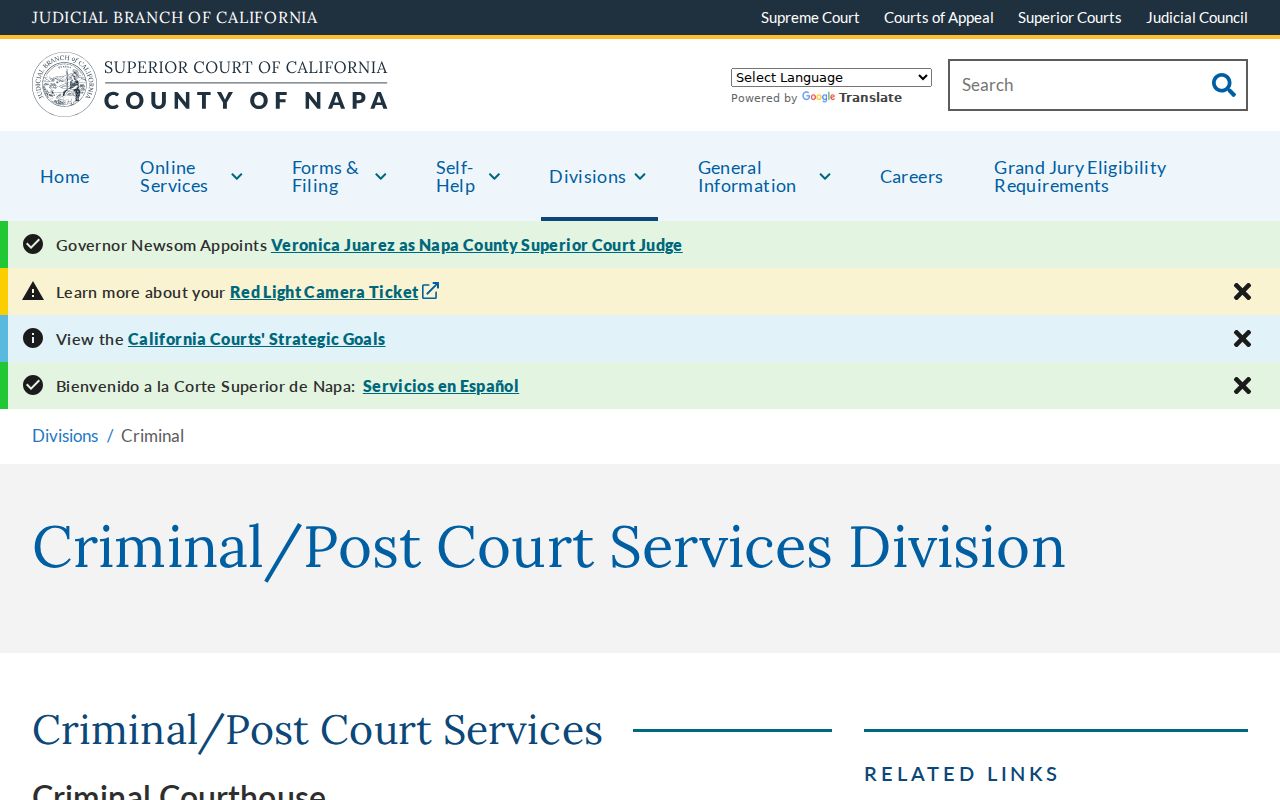
The captured office information helps keep criminal requests at 1111 Third Street instead of another Napa courthouse location.
Administrative court records use Rule of Court 10.500 and a different form. They are not requested as a defendant's criminal case file. Mail requests use the criminal form, payment arrangements, and a stamped return envelope. Files pulled for viewing remain available for only 10 days after notice.
Napa Case Record Access and Restrictions
California Rules of Court 2.503 and 2.507 separate remote document access from calendars, indexes, and registers. Napa's portal excludes confidential cases. Juvenile matters, sealed records, protected victim information, and other restricted data do not appear like an adult public file. Remote exclusion also does not promise unrestricted counter access; the clerk still applies the governing rule and redactions.
The official Rule 2.503 page explains California's electronic-access boundary.
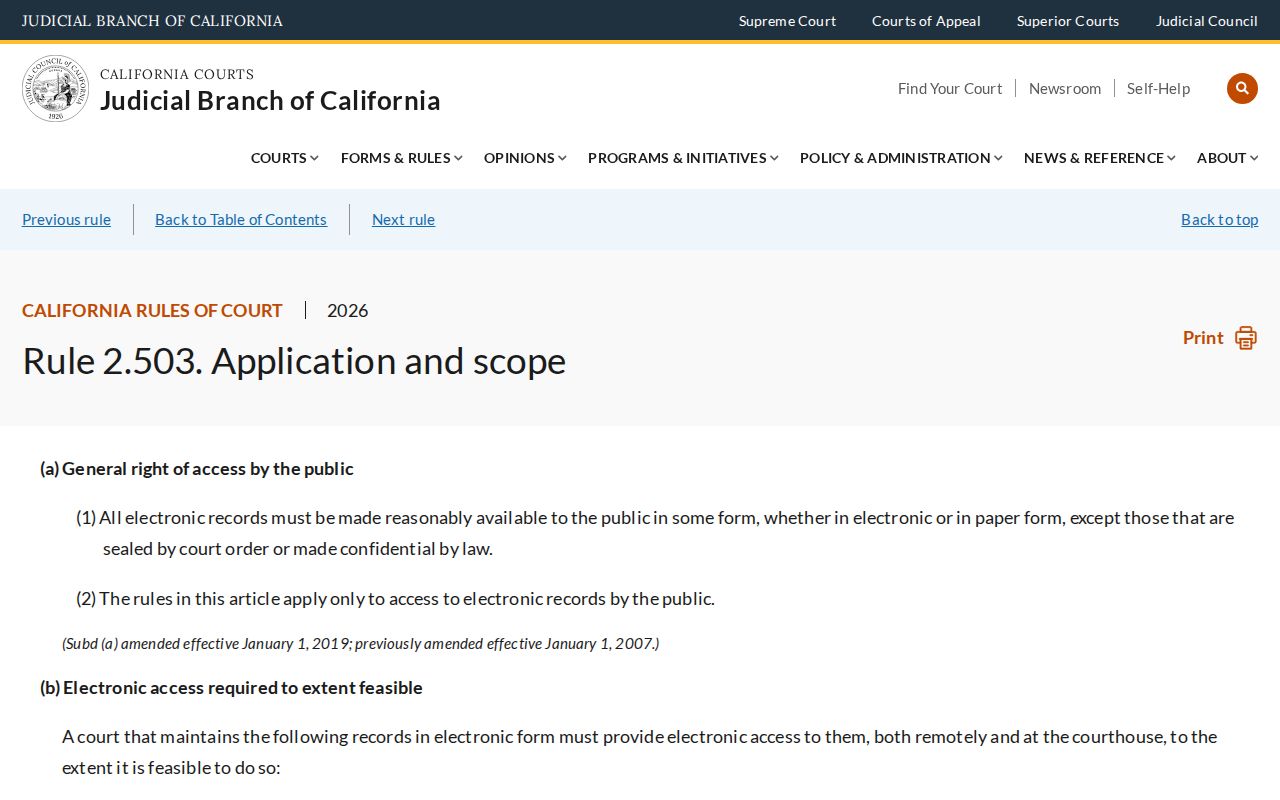
The rule explains why an index may be visible from home while a filed document still requires the Napa clerk.
The portal bars bots, scraping, data mining, disruption, and misrepresentation. If a Napa County case is missing, ask the clerk about access instead of assuming it never existed. A California DOJ fingerprint self-review is a different statewide repository product and cannot replace the court file. Penal Code section 11105 controls that repository, and California provides no general public DOJ name search for another person.
When access is restricted, the next step is a clerk inquiry, not an attempt to bypass the portal. Ask whether the file is confidential, sealed, juvenile, awaiting indexing, or available only through a permitted counter request. Penal Code section 1203.4 relief may change case status after qualifying probation completion, but it does not erase every historical government entry. Review the order with the later register entries.
Napa Court File Cross-Check
When two records seem inconsistent, compare the court case number, filing date, party-name format, and each count's disposition. A booking charge may differ from the complaint after prosecutor review, and a later amendment may change the docket again. The judgment and sentencing record are the strongest court sources for the final result. For a certified statement of that result, order the relevant document from the Napa Criminal Division rather than relying only on a portal summary.